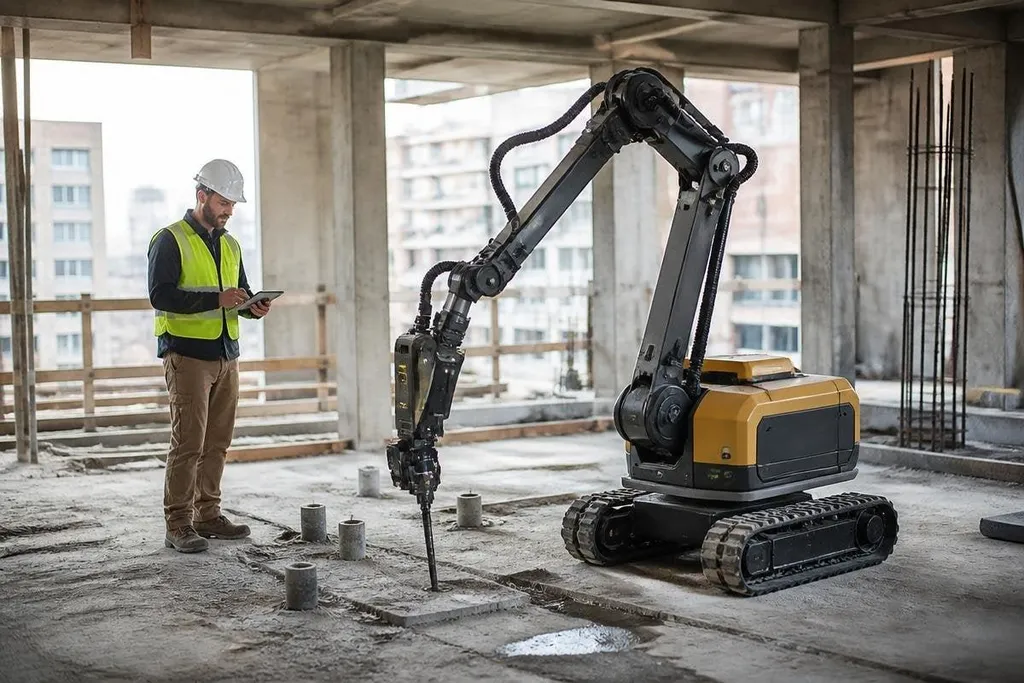
Construction sites change from one day to the next. AI helps robots read those changes, plan around them, and carry out tasks that once needed constant human control. The useful shift is practical: robots can work with less rigid instructions.
- Cameras and LiDAR help robots read uneven, changing work areas.
- AI can turn drawings and sensor data into task plans.
- Human checks still matter when safety, errors, or unusual objects are involved.
Robots need more than fixed routes
A factory robot often works beside the same parts, tools, and fixtures each day. A construction robot may face loose materials, unfinished floors, poor lighting, moving workers, and equipment that was not in yesterday’s plan.
AI helps by turning sensor data into a working map. Cameras record images, LiDAR measures distance with laser pulses, and an inertial measurement unit tracks movement.
Those inputs help a robot estimate where it is and what sits around it. That estimate is never perfect. Dust can block a camera, sunlight can affect image quality, and a stack of boards may move after a delivery.
Its software needs to update its view instead of following a route saved at the start of the job.
From drawings to work plans
Construction robots can also use digital building information, often called BIM. BIM stores details about a building’s parts, locations, and planned order of work.
AI can compare that model with fresh site data. A robot might check whether a wall sits where the plan places it, mark points for drilling, or identify an area that needs another inspection. The value comes from linking the model to what the robot sees on the floor.
That link also changes how people give instructions. A technician may set a work area, choose a task, and review the robot’s plan instead of guiding every arm movement. The system still needs limits for speed, force, and distance from people.
Those limits need a record of the machine, task, site, and result. A construction-robot report from Robot24.com can put those details beside claims about AI control, so you can tell a robot that repeats a planned task from one that adapts when the work area changes.
Where AI helps on site
AI is most useful when a task contains repeated work but the surroundings keep changing. Layout robots can locate points from a digital plan. Mobile platforms can carry tools or materials while adjusting their route around obstacles. Inspection robots can compare new images with earlier site records.
The same approach can help with progress checks. A robot can capture images from set positions, attach location data, and send the record to a project team. That gives people a dated view of work that may be hard to inspect in person.
For these tasks, human-like judgment isn't needed at every step. The robot needs a narrow job, reliable sensors, and a safe response when the scene falls outside its training or rules.
The limits are still on the floor
Construction sites are difficult places for AI. Materials can look alike while having different properties. Temporary supports may block a planned route. Workers, vehicles, and subcontractors can enter the same area without a robot knowing their next move.
Training data also matters. A system built from clean images may struggle with rain, mud, glare, or a half-finished structure. A good demo shows that a robot completed one task. It does not prove the robot can repeat that task across different sites.
Safety adds another limit. A person must be able to stop the robot, understand what it plans to do, and reach it when something goes wrong. I’d trust a construction robot sooner for measured layout or inspection than for work beside people with heavy materials.
A buying checklist for construction teams
Before choosing an AI-enabled robot, check these points:
- Defined task: Can the supplier state the exact job, surface, material, and site conditions the robot supports?
- Sensor limits: What happens in dust, rain, glare, poor light, or blocked views?
- Human control: Can a trained worker stop the robot and take control without a long setup?
- Site data: Can the system read the BIM files and export records in formats your team already uses?
- Failure record: Does the supplier show tasks that stopped, needed help, or produced bad data?
- Ongoing cost: What do software access, training, repairs, and sensor replacement add to the purchase price?
These checks move the decision away from a polished video and toward the work your crew needs done. AI can make construction robots more flexible, but the site still decides whether that flexibility holds up.
The next useful test is simple: run the robot on one repeatable task through changing site conditions, then count how often a person must step in.